
These are tropical Begonias and are foliage type -- they typically have stunning foliage and can make great additions to one's plant collection. If you admire foliage as much as flowers, then you will understand this attraction.
Begonias
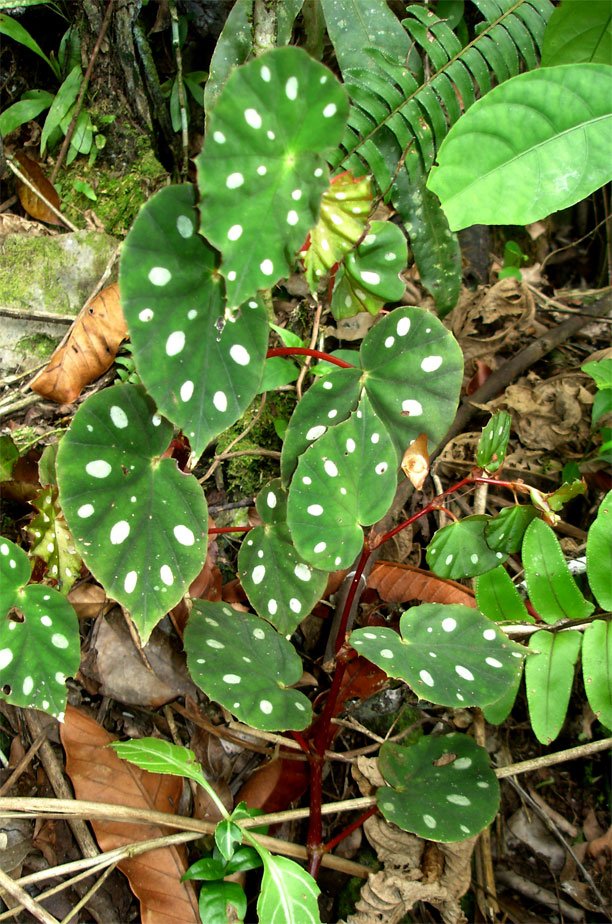
We focus on species and would say many of these are not "Average Begonia" -- while many growers might think of Begonias as care-free windowsill plants, or even as outdoor annuals! Begonia actually a vast and varied family. They contain many species and types, not all of which require the same care. Several of our selection are plants that need more attention to humidity and moisture. Oftentimes, terrarium or greenhouse care is necessary. Some example species included here are: Begonia chloroneura, Begonia polilloensis, Begonia rajah, Begonia smithiae and so many others.
These and so many other similar species & hybrids are best accommodated in humid greenhouses or in terrariums. Growing under artificial lights is also a common arrangement that allows for easier temperature management. In addition, some Begonias can also be of a tuberous type. Those of this nature, such as Begonia pteridiformis, Begonia integrifolia and Begonia curtisii do best is a seasonal dry and coolish rest is provided - typically during the dry season.
Curious to know about recommended media? This varies depending upon the container and watering practices. In general, try to use very coarse, porous media. What we choose in our nursery is a mixture of peat, perlite, vermiculite and chopped sphagnum. A ratio of the above that works for us is roughly - 3:3:1:3 Actually the ratio of all these ingredients can vary depending sometimes upon the plant itself as well as whether it is to be grown in a closed terrarium or in an open greenhouse. For those known to grow natively in Limestone regions, particularly Chinese and Vietnamese native species, we also add a small percentage of Limestone powder to the mix. Whatever media is used, remember that a healthy well-developed root system is paramount to good growth of the plant. If you are not seeing good root activity, then something is off and needs adjustment.
During the spring-summer months, or as long as the plants appear to be actively growing, to ensure they receive adequate and sufficient supply of nutrients. this is best provided via a good quality, complete (with micro nutrients & trace elements), fertilizer. Do keep in mind that the warmer the weather and brighter the light they are receiving, may dictate the frequency of the feeding needed.
Explore Our Begonia Collection
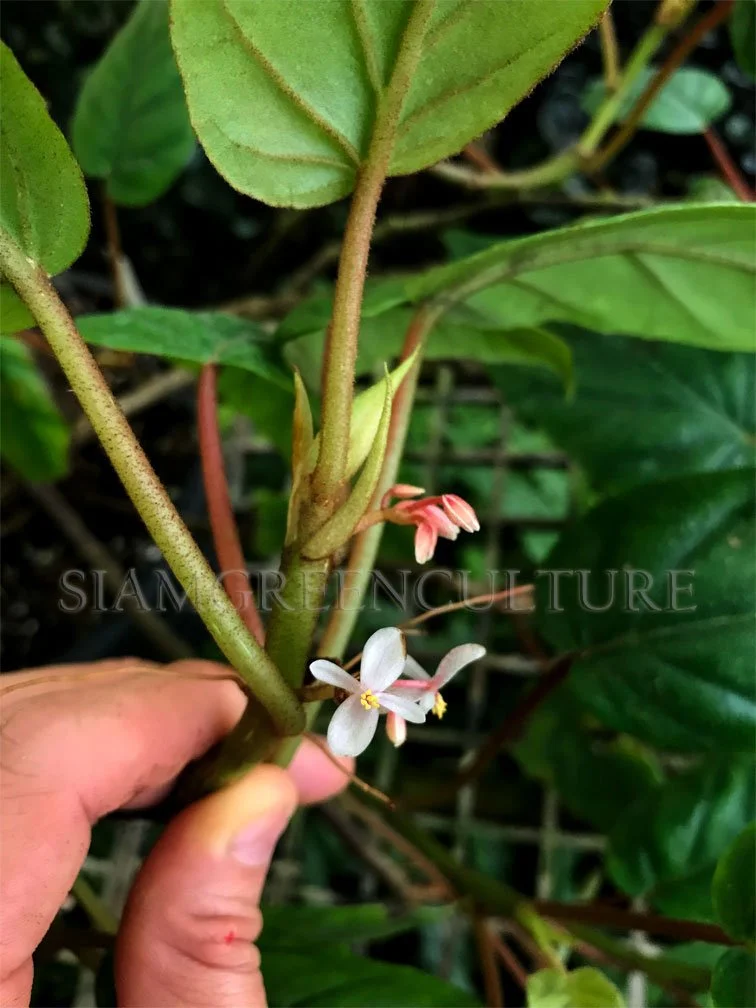
Begonia afromigrata belongs to section Tetraphila that consist of 30 other species, most occur in Africa. The Afromigrata is the first and still only the species reported in SE Asia, showing transgressing continental borders. A dated molecular phylogeny places the split of the new Asian species from its African congeners during the late Miocene to the early Pleistocene. As the species is a hygromesophilous epiphyte limited to tropical forest, no suitable corridor for migration existed during that time and the cause of the Afro-Asian disjunction probably is a long-distance dispersal event. The discovery this specie emphasises the importance of chance in the assembly of tropical floras.
In SE Asia, it is a locally endemic specie, with only two populations. The one in South-Western Thailand and another in Vang Vieng Valley, Central Laos. They usually found climbing on upper tree-trunk in dense evergreen forest. Their thick and succulent leaves can grow to 5'' long and 3'' across and highlighted with rosy pink flowers with a white edge, which borne on the leaf axils along the large creeping rhizomes.
We are probably the first nursery produces this extremely rare specie for sale. Our offerings are cloned from our specimens collected in South-Western Thailand. Seem not overly difficult. Neutral to acidic medium that never fully dries out is preferred.
Offered are cutting-grown plants, established in 3" pot
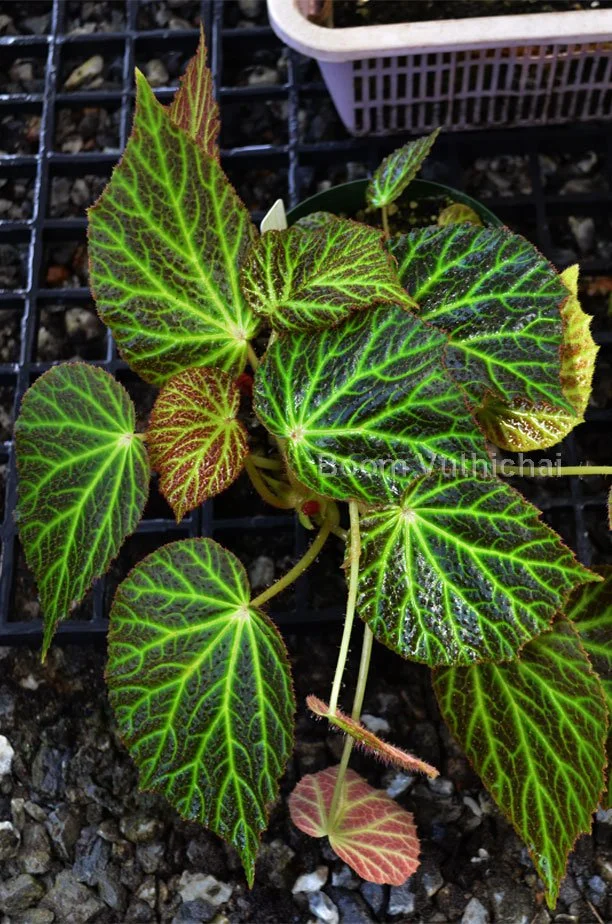
Formerly known as U251. This gorgeous species from the Philippines bears medium sized leaves, which are a rich reddish brown highlighted by showy chartreuse veins. The margins and petioles are covered short red hairs. This makes a magnificent full specimen.
This species requires extra humidity. Best suit for sealed container and as a terrarium subject.
Offered are starter plants, established in 3" pot
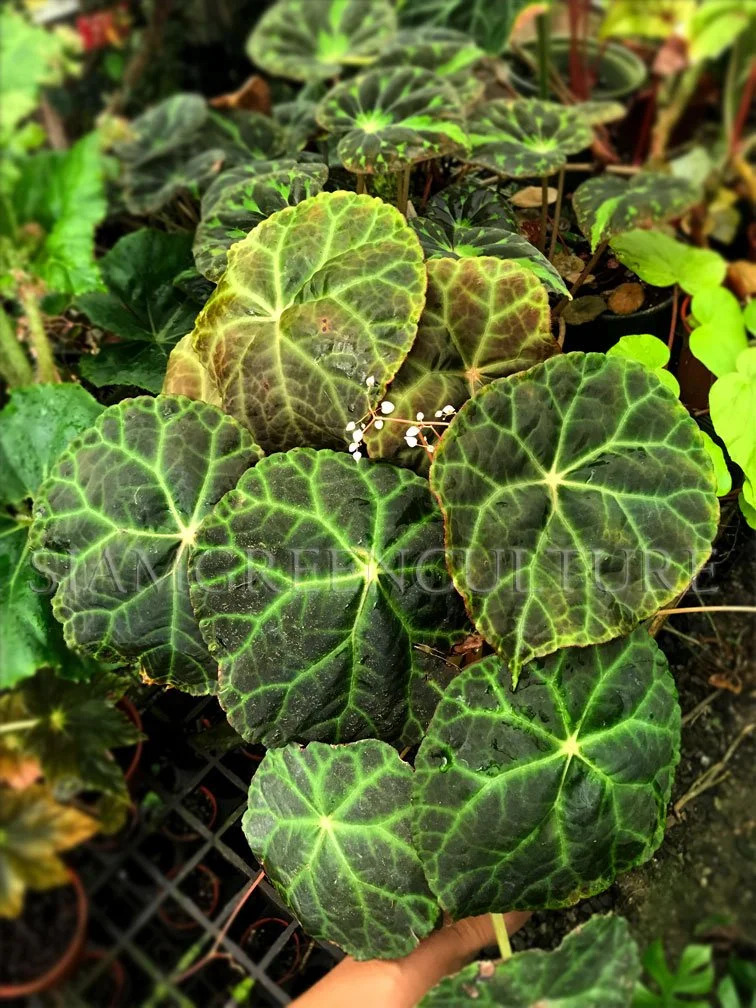
Begonia goegoensis is a spectacular rhizomatous species from Goego Island, Sumatra, Indonesia. It has been long time in cultivation and still popular from its stunningly attractive peltate leaves in bronze color and dull red on the underside. Tiny white flowers rises occasionally above the clump.
It is considered a large grower that can be 2 ft. tall when well care. Fairly easy in warm and high humidity. Great care should be exercised to not overwater.
Offered are starter plants, established in 4" pot
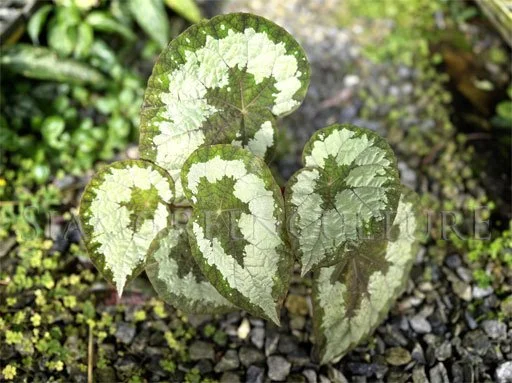
"Rex" the species used to create hundreds of hybrid Begonia for a century. First discovered in Northern India and later found populations span across the Himalayan Region. Offers here are plants collected in Assam. The leaves can grow to 10", have dark olive green areas in the center and on the leaf margin. Between these two green areas is a unique, wide band of silver. Undersides of the leaves are in red. The leaf blade and petiole are sparsely covered with long white hairs. The large light pink flowers bloom all year round.
This species requires moderate temperature and extra humidity. Excellent as a greenhouse subject, as well as medium to larger sized terrarium.
Offered are starter plants, established in 4" pot
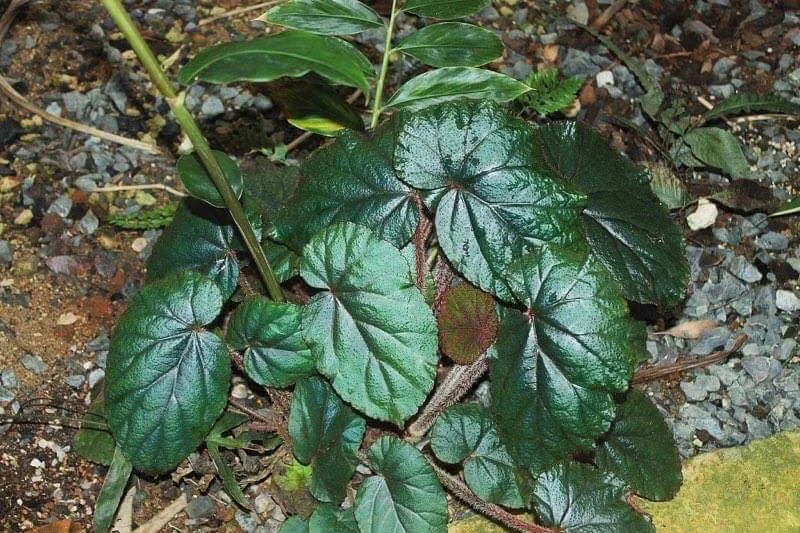
Rarely offered Himalayan species. Begonia cathcarthii is a medium to tall, rhizomatous type bearing deep olive green leaves with thin, red trichomes. The leaves also rise from stunning hairy petiloles and always show nice iridescent sheen without much effort!
This specie is associated with begonia rex and care is similar; require intermediate conditions, relatively high humidity and good air movement to grow well.
Offered are mature plants, established in 4" pot
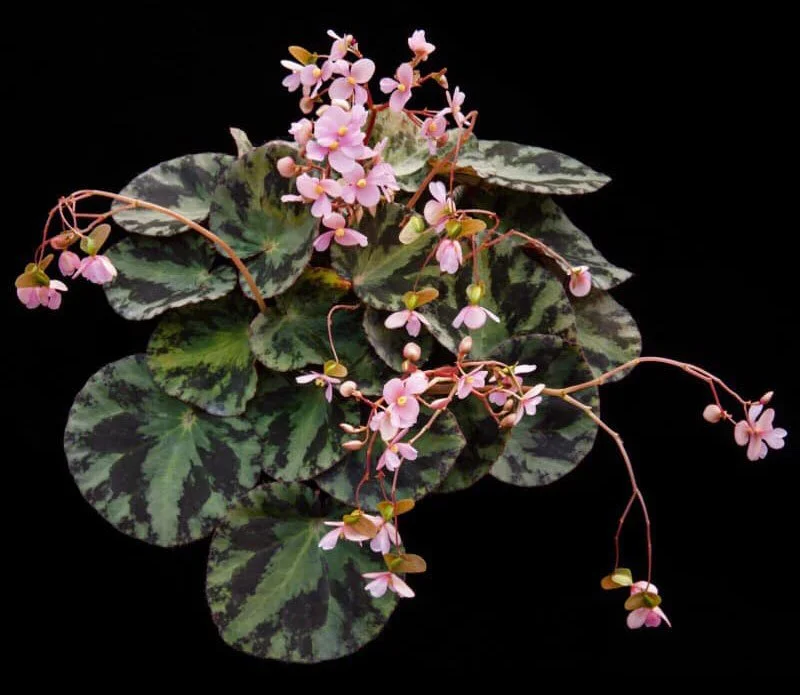
Another highly ornamental species from Puerto Princesa, northern Palawan, The Philippines. Very similar to Begonia cleopatrae but differs in its slightly more compact growth habit and rounder foliage. Tolerant of lower average indoor humidity and a great beginner's species.
Offered are mature plants, established in 3" pot.
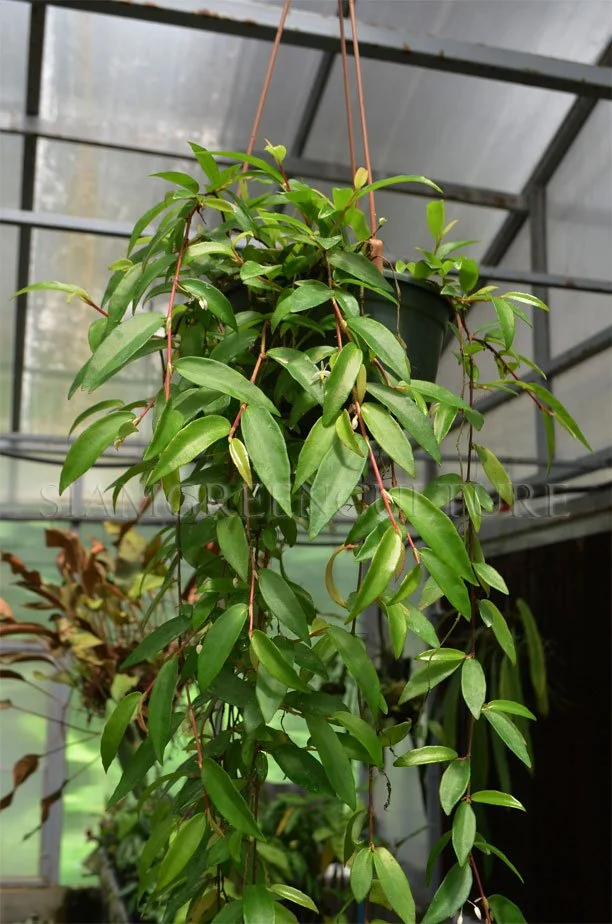
Unusual small vining species from Africa, with succulent, strap pale green leaves rise along the wiry creeping (better say cascading) rhizomes. Tiny white flowers appear in small clusters from the leaf axils. This is a very unique species among African Begonias.
As an epiphyt, it performs well as a terrarium specimen but also needs good light to do well. Prefers neutral to acidic medium with lapse between watering.
Offered are cutting-grown plants, established in 3" pot
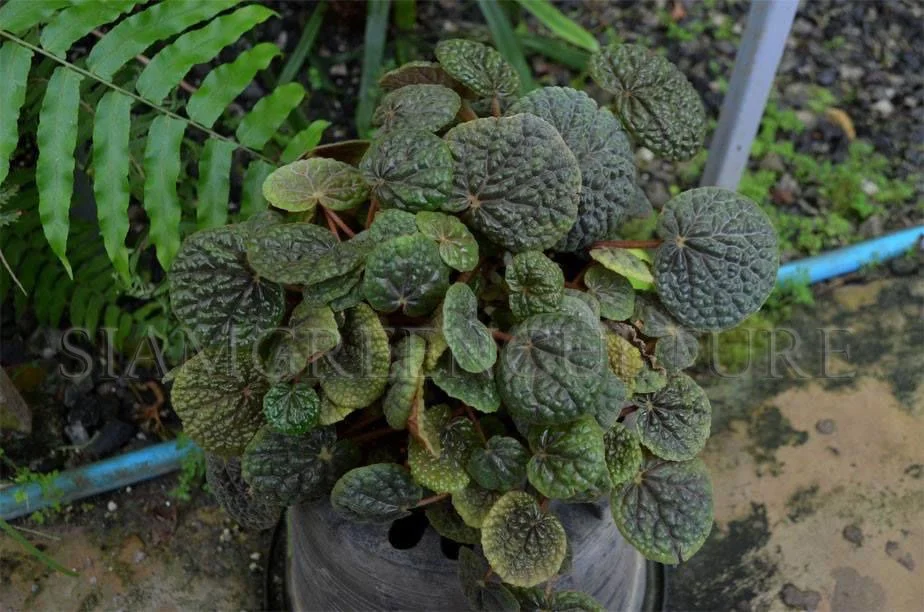
Collectible and one of the most dramatically corrugated leaf type species, characterized by round, heavily textured foliage in olive green and tinted in burgundy undersides. Wiry stalks rise above the plant, with cluster of tiny white flowers.
It is a rhizomatous specie always stays under 6″ so it should also be a compact grower. Love high humidity, but do not allow the leaves wet overnight. Probably best as a great non-invasive addition to a terrarium or as a terrarium specimen alone.
Offered are starter plants, established in 3" pot
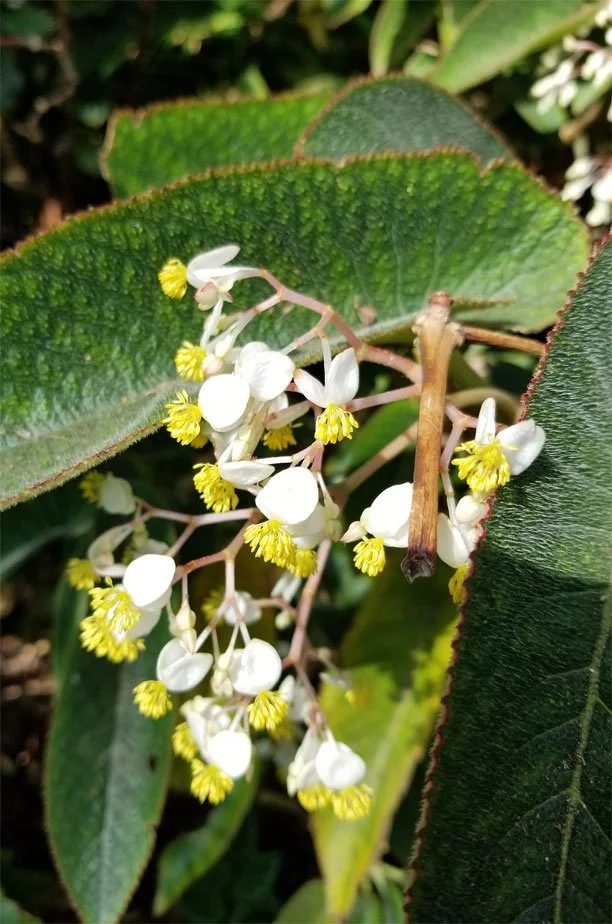
Very unusual species from Southern Brazil, with upright, woody stems usually bare except near the tip. Bright green, textured leaves with a red edge are lightly serrated edge and slightly folded up along the mid rib. Profuse white flowers in large open clusters in spring.
It is a large grower can exceed a meter in height and fairly easy to grow. Perform well under light shade in coarse, porous media. Tolerates for drought and dry conditions better than many begonias.
Offered are starter plants, established in 3" pot.
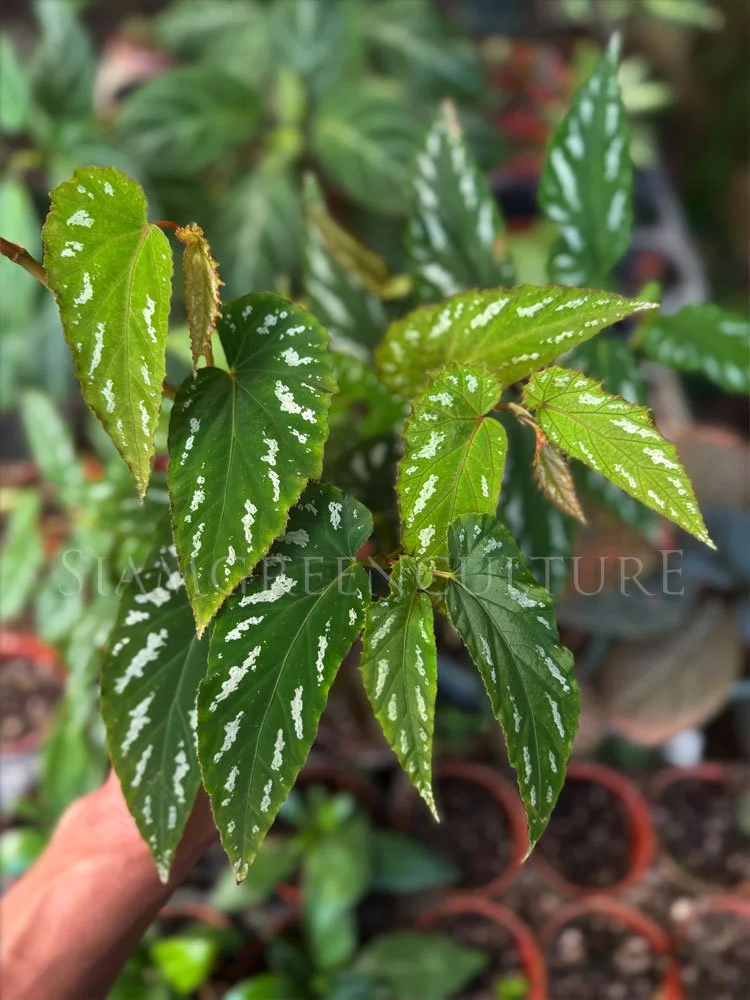
New species from Himalaya of Northern Myanmar! It has a cane type growth habit like Begonia longifolia but differ by having hairy leaf margins, petioles and stems. Foliage also marked by silvery reflective blotches and tinted in purple undersides. Large pink blooms occur on the top of each stem.
It can grow to 2 ft. in our cultivation. Seem fairly easy and well adapt to various climates, including lowland, warm weather. Perform well in shady positions.
Offerd are cutting-grown plants, establish in 3" pot
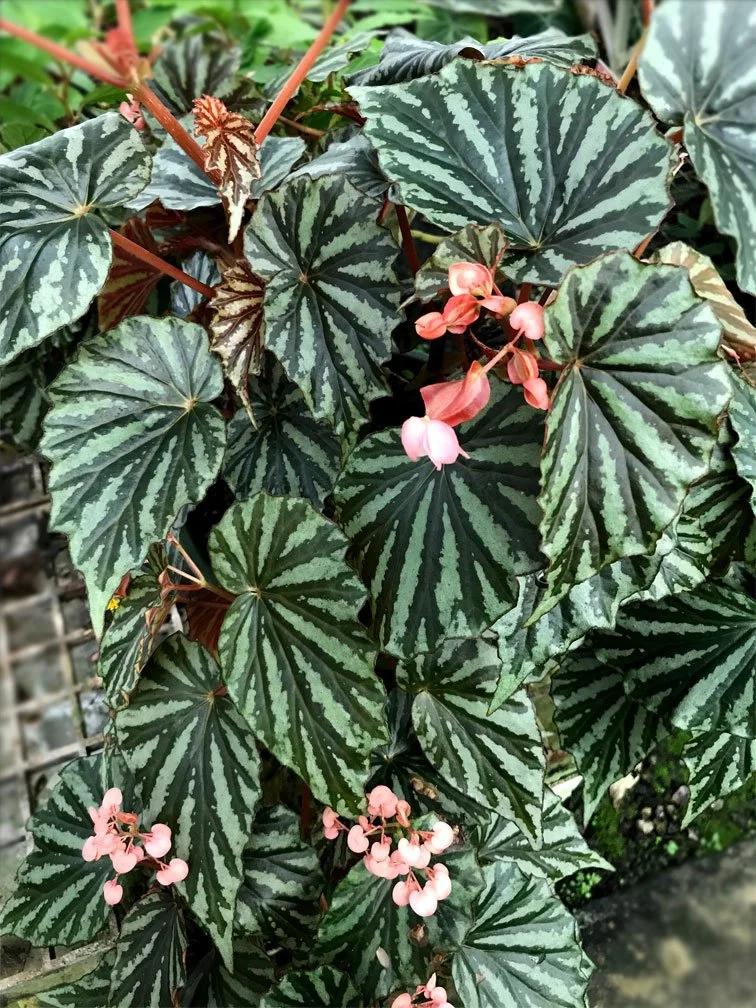
Strikingly beautiful species said to be from Irean Jaya (Indonesian New Guinea), with deep green foliage, which can be in almost a black appearance when grown under high light level. In contrast to this is the silvery central venation. Forms Bushy plants in time. Probably best as a terrarium plant.
Offered are cutting-grown plants, established in 3" pot.